Quote:
Originally Posted by
HgaleK 
Question for you good folks here- does anyone have a primer on what the various settings on guitars and amps do? I've got a MIM Strat and Roland Cube 30 which I've dicked around with, but I'd like a slightly more technical understanding so that I can dial in my tone a little more.
Most of this is done through
practice (srs) with a basic subset of knowledge from experience and understanding sound.
Learn how different frequency points affect how the guitar sounds, and how cutting or boosting that changes the voicing. Trying out many different guitars--> same amp or different amps-->same guitar (even if you don't buy), can really help with understanding what causes them to sound the way they do. Also understanding frequencies that underly knob voicing on the amp.This starts with understanding what the difference 2k boost/cut has compared to one at 10k.
If you want to get geeky,
Read lots of free basic articles like these, while keeping in mind the subjectivity of tone:
Understand basic physic of frequencies and sound wavelength
http://www.sciencebuddies.org/science-fair-projects/project_ideas/Music_p010.shtml
http://www.physicsclassroom.com/class/sound/u11l5b.cfm
http://en.wikipedia.org/wiki/Acoustics
http://en.wikipedia.org/wiki/Sound
Now find in-depth or more opinionated thoughts on different frequencies.
http://www.recordingeq.com/Subscribe/tip/tascam.htm
http://www.audio-production-tips.com/guitar-frequency.html#
http://www.audio-production-tips.com/graphic-equalizer.html
http://www.audio-production-tips.com/parametric-equalizer.html
ect.
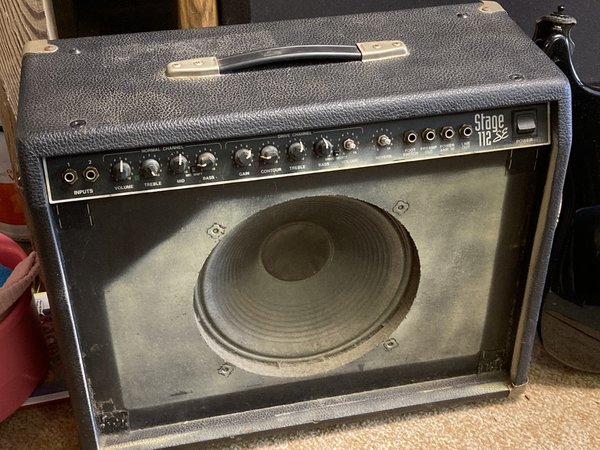
If you can get a used, rack multi-point EQ (or computer simulation) and run everything else clean (not really possible with as amps and headphones have inherent voicing). Now, spend an afternoon messing around with it, you can really help in understanding the range of the different sounds and how they affect your guitars inherent voicing. Train your ears. Now, take this knowledge and run through a parametric eq, playing around not only with eq set points, but also the "width of the hump" (forget term) as you change around with different mid-set points.
tldr; My player's opinion:
Mids encompass a large swath of the fundamentals and overtone frequencies created by a guitar, and are the tonal "lifeblood" in guitar and amp voice pairings...
Shore those up first, then focus in on treble and bass, in that order.