Quote:
Originally Posted by
DWFII 
It all comes down to profit margins, and that in turn governs what the priorities of the operation are. By itself Goodyear construction is so commonplace as to almost be the new standard of quality , especially among those who don't know any better. But unfortunately the switch from handwelted (or some reasonable facsimile) is indicative/symptomatic of a more profound flaw in both vision and the acceptance of responsibility to the customer.
All by way of saying that once Goodyear construction is embraced, other expediencies are inevitable.
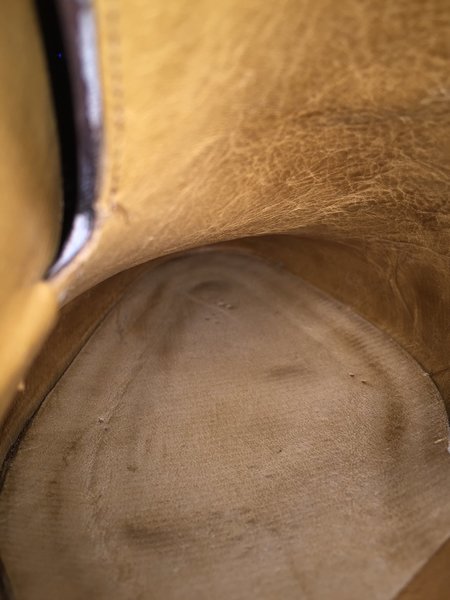
I don't know of a single exception in which Goodyear construction has not led to a concomitant decrease in the quality of the insole. Sometimes...at least for a time...the insole remains leather, although not of the same substance or quality needed for hand welted work. But eventually fiberboard or leatherboard insoles are substituted. It's too tempting inb terms of profit especially since the customer doesn't know any better and seemingly doesn't care to know.
And so it goes...all in the name of minimizing the cost of production and maximizing profit.
Eventually, even if a company starts out hand channeling the outsole, somewhere along the line pressure will mount to get rid of the labour costs and the time associated with hand channeling and a faster cheaper solution will be sought.Sometimes those solutions are satisfactory in terms of objective quality...sometimes not so much.
When a shoe is stitched aloft or groove channeled, grit gets to the stitches almost immediately and begins to destroy the integrity of the stitch. Everyone who knows anything about shoes or even simple mechanics understand this is going on. But it's cheaper, it allows the shoes to compete at a more profitable margin and as Isshin mentioned, marketing will take up the slack.
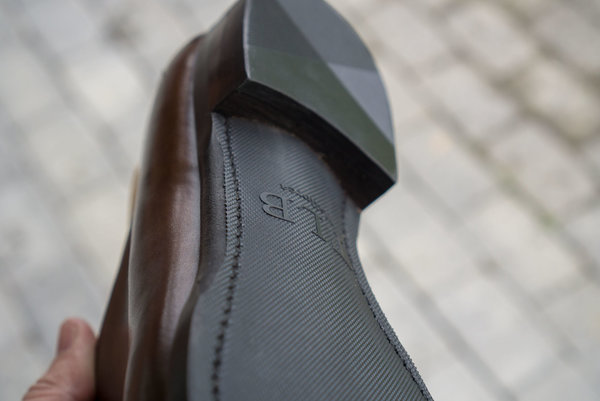
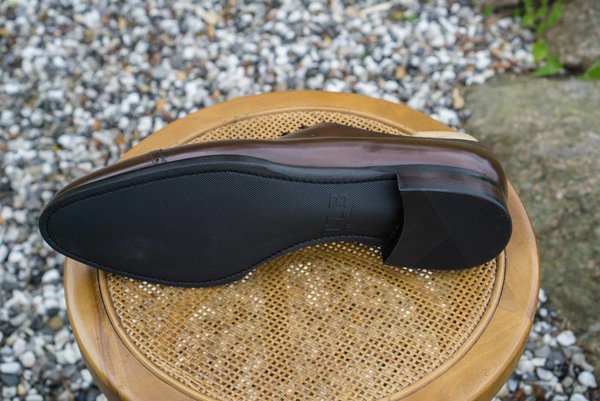
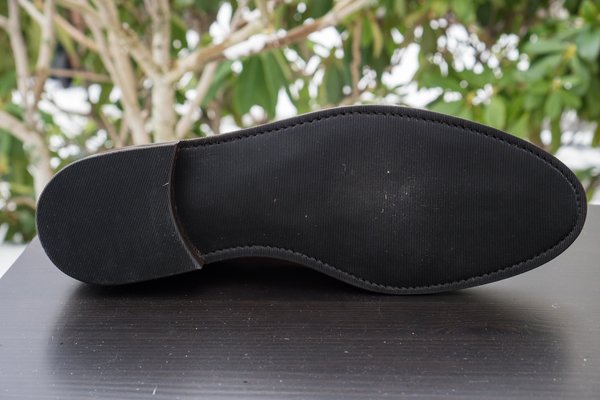
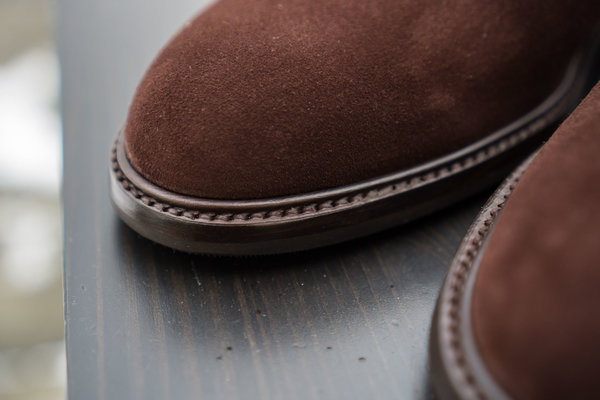
I don't see anything functionally wrong with a tightly closed, machine sewn, vertical channel. I like and admire an angled channel, hand cut or machine cut.
But a horizontal channel, hand cut, or more likely machine cut, is almost as bad as stitching aloft. And IMO, a grooved channel is not much better than stitching aloft.
I appreciate the time you took to address this. Couple of questions: wouldn't a closed-channel welt stitch or whatevs last longer than an open channeled one no matter what angle the channel groove was cut provided they all had oak bark tanned soles? Obv the deeper the angle, the longer the shoe will go before the stitches are exposed. But I like to think of this as a sort of leather Topy
![peepwall[1].gif](http://files.styleforum.net/images/smilies/peepwall%5B1%5D.gif)

Also, if it costs a bit more to do the closed channel, wouldn't it beg to reason that this is a superior product (all other things being equal)? I know you can buy, say, C&J benchgrades, etc. with an open channel and exposed stitches but how could they upsell the handgrades if not? When I used to sell new cars you were instructed to take the "up" to the lesser model first, then show them the better equipped models. Not the other way around. For, if they couldn't afford the top of the line model, they will always be left thinking they are missing out on something. See my point?
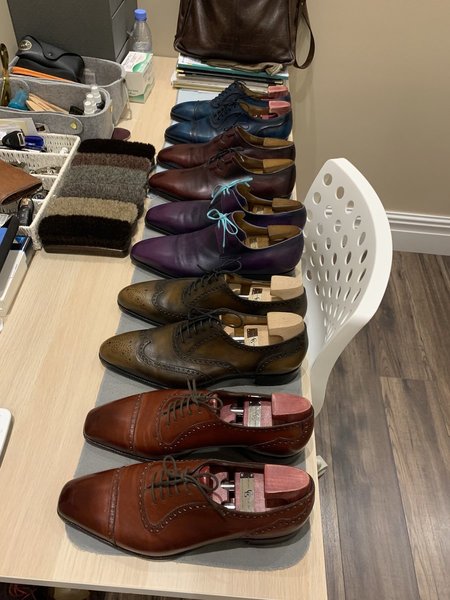
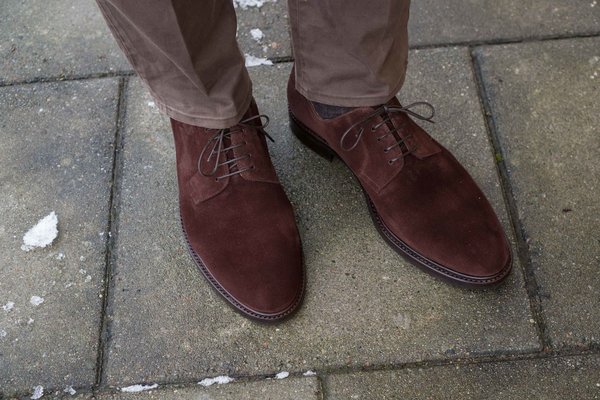
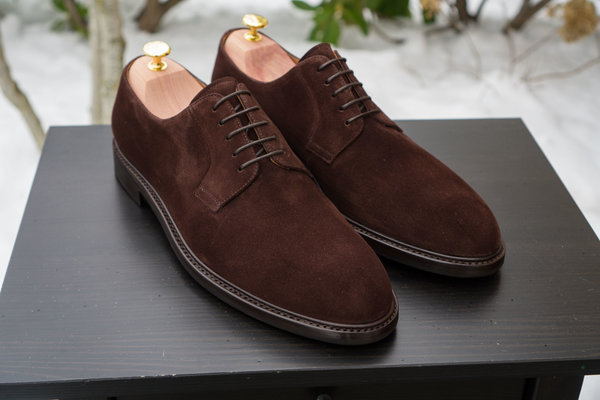
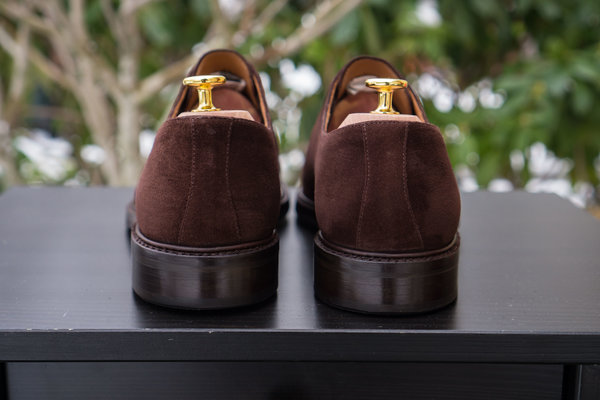
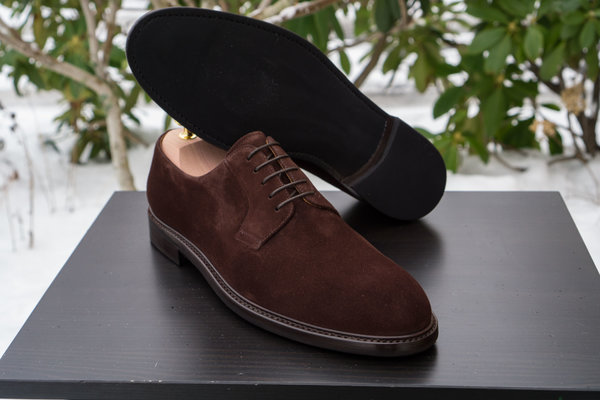
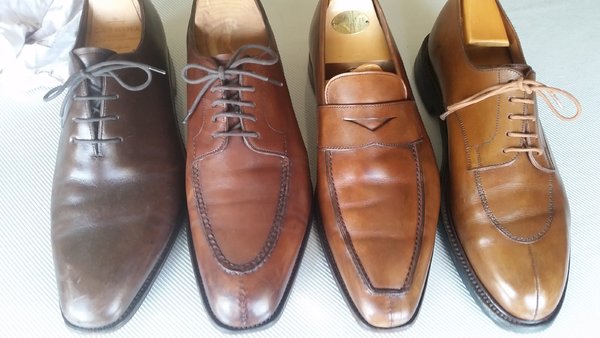
Here are the shoes I currently own which are all made with closed channel stitching:
EG Midford
EG Malvern
EG Inverness
AS Bristol
AS Milton
C&J for PRL Redway
Carmina split-toe derby on the Alcudia
Carmina semi-brogue on the Simpson
I list those because in my 5+ years being a member here I've owned a boatload of other shoes by other makers and these are the ones I've settled on (will probably add 2 more pair to make it 10). I've owned some really well made shoes that feature open channeled soles but they really didn't stack up to the closed channeled soled shoes I've owned.
So, as a shoe maker yourself, what do you prefer? Open or closed?